
Cryptocurrency Games That Teach Real Skills
Cryptocurrency games put you in charge of a character who trades digital assets inside a live market. You learn chart reading, risk sizing, and automation by completing quests instead of watching videos.
- Focus on games that use real chart data and timed decisions.
- Look for spaced-repetition quizzes that reinforce weak topics.
- Player-to-player trading creates an economy you can study.
- Automation tools inside the game mirror real platform settings.
What makes a cryptocurrency game useful for skill building?
You open the game and see a price chart that moves in real time. Your next quest asks you to enter a long position with a clear stop-loss. If you get the timing wrong the character loses in-game currency and the quest repeats later with variations.
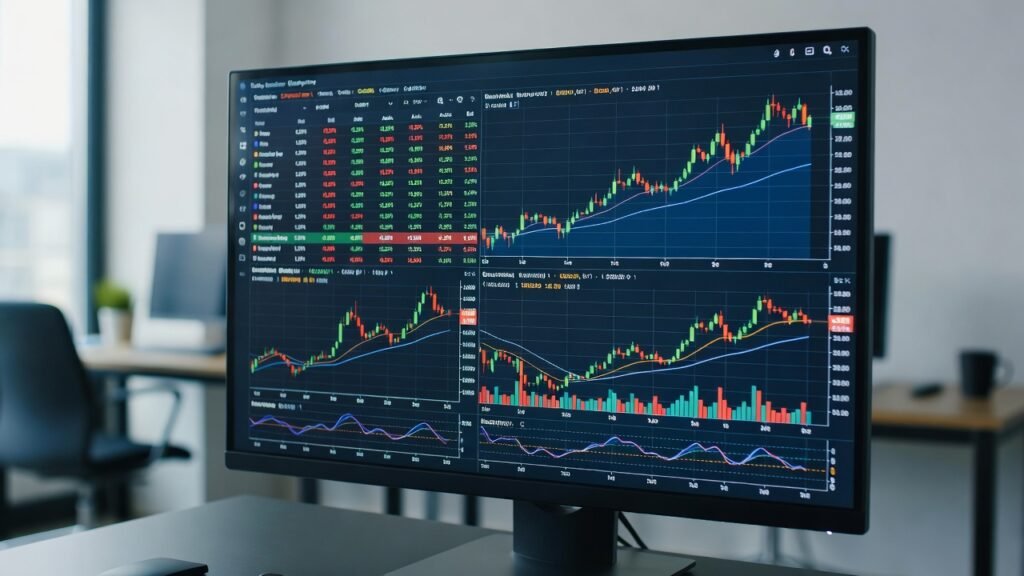
Useful games share three traits: actual price feeds, immediate feedback on every trade, and progression that forces you to revisit earlier lessons. Without these elements the game becomes just another idle clicker.
Check the market type first
- Does the chart use live or historical data?
- Can you go long and short?
- Are spreads and margin rules visible?
How do quests replace traditional lessons?
Each quest is a short scenario. One might require you to read three candles and decide whether to hold or exit before a timer hits zero. Another places you in a margin call situation so you practice quick position sizing.
Because the battles are timed, you train under mild pressure. Wrong answers return in future quests until the pattern sticks, similar to spaced repetition apps but wrapped in an RPG story.
Quiz battle structure
- Ten-second timer on normal fights.
- Five-second timer on boss encounters.
- Topics rotate automatically based on your accuracy.
Why player economies matter in cryptocurrency games
When other players can buy and sell items or positions from you, prices start to reflect real supply and demand. You learn to read order flow without needing a brokerage account.
Look for games that allow direct player-to-player trades and keep records of past deals. Those logs become study material for spotting trends in virtual markets that often mirror real ones.
Automation practice inside the game
Some titles include a bot lab where you adjust inputs that match real MT5 parameters. You test different stop distances or indicator periods on historical runs and see win-rate changes immediately.
This setup teaches you the same settings you would use on a live platform, minus the financial risk. Treat every parameter change as an experiment and keep notes on what improves results.
Connecting the dots to World of FJU
In World of FJU the Bot Lab lets you tune an in-game robot with the exact inputs used by real Expert Advisors. One quest chain walks you through adding a moving-average filter, then back-testing it against earlier worlds you already cleared. The same character later joins a clan where active members share trade logs in world chat.
World of FJU is educational; trading real money carries risk of loss. In-game currency has no guaranteed value. Games with wagering or affiliate mechanics should be played for fun and learning, not income.
Out of invite codes? Our Discord is where players hand them out and help each other daily: join the World of FJU Discord.
Frequently Asked Questions
Do cryptocurrency games require real money?
Most run on in-game currency only. You can practice every feature without spending.
How long does it take to see skill transfer?
Players who finish the first three worlds usually notice better chart reading within two weeks of daily play.
Can I play on a low-spec computer?
Yes. All gameplay runs in the browser with no download or install required.
Are the markets connected to real exchanges?
Charts use real price data but all positions stay inside the game. No real funds move.