

A virtual stock market game lets you practice live price action, order types and risk decisions inside a simulated environment that mirrors real exchanges. You open positions on moving candles, manage margin and review results without touching real capital.
- Virtual stock market games use real chart mechanics so practice transfers to live markets.
- Timed quizzes and spaced repetition lock in candle patterns and risk rules.
- Player-driven economies add depth through actual supply, demand and trades.
- Automation labs teach robot settings that match real platform inputs.
How does a virtual stock market game differ from paper trading apps?
Most paper trading tools give you a blank order ticket and static prices. A true virtual stock market game adds quests that force you to read specific patterns, fight bosses under time pressure and manage margin across changing volatility.
What core mechanics make these games effective for skill building?

Effective titles combine three layers. First, live candle feeds that update every few seconds. Second, quiz battles where you answer pattern questions before the timer expires. Third, a persistent economy where other players buy and sell the same assets you watch.
- Long and short buttons appear on every chart.
- Stop and take-profit fields match standard platform syntax.
- Daily quests reset weak topics automatically through spaced repetition.
Which trading concepts appear earliest in a good virtual stock market game?
The first worlds usually cover basic order types and candle anatomy. Later stages introduce margin calculations, psychological tilt during drawdowns and confluence between multiple indicators.
How do player economies change the learning experience?
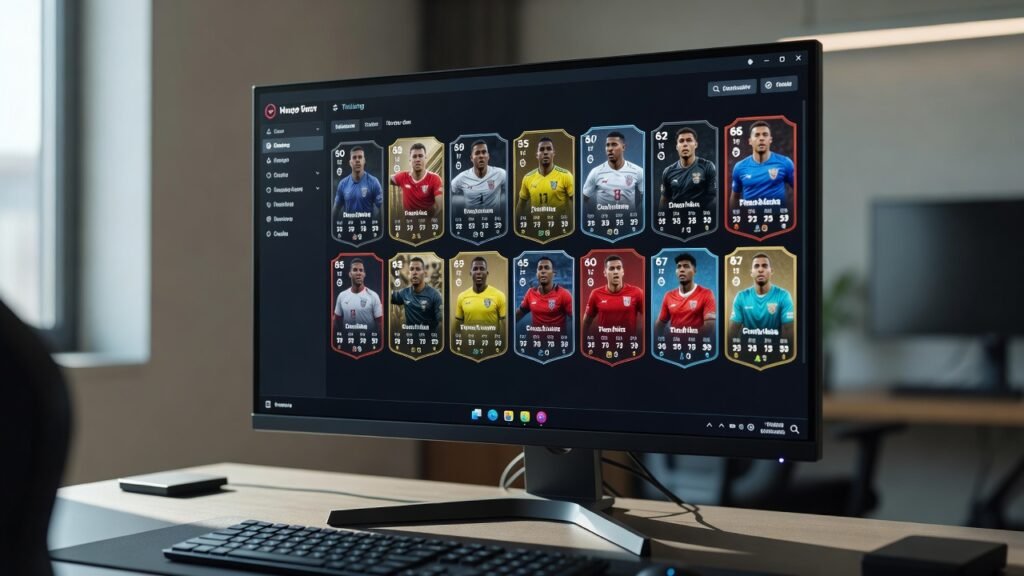
When every asset has real buyers and sellers, prices move for genuine reasons instead of random scripts. You learn liquidity, slippage and the impact of large orders the same way you would on an exchange.
- Collectible trader cards drop after boss fights and carry permanent bonuses.
- Duels let you wager in-game currency on who reads the next candle better.
- Clans function as affiliate trees that reward consistent activity.
Can automation features in these games prepare you for real bots?
Some titles include a Bot Lab where you tune inputs that copy real MQL5 Expert Advisor parameters. Changing lot size, stop loss distance and indicator periods inside the game teaches exactly the same settings you later apply on a live platform.
Where does World of FJU fit into this category?
World of FJU places its virtual stock market inside seven sequential worlds that start with basic candles and finish with full automation trials. Quiz battles run on a 10-second timer, the Bot Lab mirrors MT5 inputs, and clans operate as active affiliate trees. The entire experience runs in the browser with no download or purchase required.
World of FJU is educational. Trading real money carries risk of loss. In-game currency has no guaranteed value. Games with wagering or affiliate mechanics should be played for fun and learning, not income.
Out of invite codes? Our Discord is where players hand them out and help each other daily: join the World of FJU Discord.
Frequently Asked Questions
Is a virtual stock market game the same as a stock simulator app?
A virtual stock market game adds quests, timed battles and a live player economy that most simple simulators lack.
Do I need prior trading knowledge to start?
No. The early worlds teach candle reading and order placement from zero before any advanced topics appear.
Can skills from these games transfer to live trading?
Yes, because the charts, margin math and psychology mechanics mirror real platforms exactly.
How do I get access to World of FJU?
Registration is invite-only. Join the Discord at https://discord.com/invite/Vg7CMseeU7 where members share codes.