
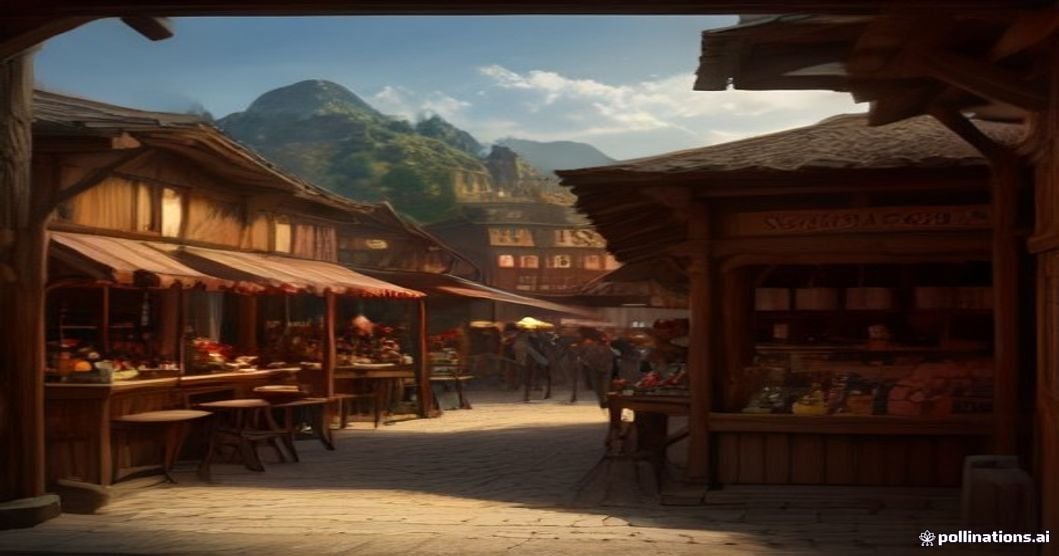
When you look for games with real player economy browser rpg setups, you are usually searching for an environment where your actions actually shape the virtual world. Unlike standard theme-park games where every item has a fixed vendor price, a true player-driven economy relies entirely on supply, demand, and the independent choices of the people playing alongside you. If gatherers stop mining ore, blacksmiths run out of raw materials, and the price of armor spikes across the entire server. That ripple effect is what gives virtual worlds true depth and longevity.
- Player economies depend on scarcity, utility, and free trade between participants.
- Specialization prevents single players from mastering every profession, encouraging cooperation.
- Browser-based systems allow seamless access without heavy client downloads or system requirements.
- Dynamic pricing models reflect real-world market principles through virtual currency and assets.
Why Static Game Shops Kill Long-Term Engagement
Picture a standard fantasy role-playing game. You defeat a boss, collect a pile of gold coins, walk up to a non-player character merchant, and buy a shiny new sword off a fixed list. Do this ten times, and the illusion of a living world fades away. The merchant never runs out of stock, prices never fluctuate based on server events, and your currency only serves as a simple progress counter. When a game relies on static vendors, it removes any incentive to pay attention to market trends or build specialized trade networks.
True immersion requires friction. When items are created by other human beings, every piece of gear carries a history. You know that the enchanted robe you are wearing was stitched by a master tailor who spent hours gathering rare silk from dangerous zones. That connection transforms a simple pixelated item into something with genuine perceived value within the community.
Core Pillars of a Functioning Virtual Market

Building an ecosystem where players buy, sell, and trade without breaking the game requires careful design. If gold flows infinitely without sinks, hyperinflation ruins new players. If items never break or leave the economy, markets become oversaturated and trade grinds to a halt. A well-designed economy balances several key pillars:
- Resource Scarcity: Raw materials must be finite or tied to risk, preventing effortless mass accumulation.
- Meaningful Crafting: Items created by players must outperform standard drops to keep artisans relevant.
- Active Sinks: Mechanisms like item degradation, taxes, or consumable usage must remove currency and goods over time.
- Direct Peer-to-Peer Exchange: Allowing individuals to negotiate prices directly fosters negotiation and social bonds.
Without these pillars, an economy quickly devolves into a stagnant pool where everyone owns everything, rendering trading pointless. When scarcity and utility are balanced correctly, every login brings new opportunities to spot price discrepancies or fulfill missing supply lines.
The Psychology of Player-Driven Supply and Demand
When you participate in an open market, you start thinking like a merchant. You watch chat channels for price checks, calculate profit margins on refined materials, and speculate on which rare drops will appreciate when a new game update drops. This shift in mindset is what draws strategic thinkers and puzzle solvers to sandbox economies.
You begin to notice behavioral patterns among your peers. Weekend spikes in player activity cause sudden surges in demand for consumables. Major guild conflicts drive up the price of defensive materials as participants prepare for battle. Learning to read these micro-trends gives you a distinct advantage, turning standard gameplay into an ongoing exercise in strategic resource management.
How Browser RPGs Deliver Seamless Access

One of the greatest barriers to deep economic games is the friction of installation. Heavy clients, massive patches, and high system requirements often turn away players who just want to check their portfolios or manage their inventories during a quiet moment at work or between daily tasks. Browser-based architecture removes that barrier entirely, letting you log in from virtually any device with an internet connection.
This accessibility creates a much more active marketplace. Because players can check market boards or adjust crafting queues quickly throughout the day, price corrections happen organically and rapidly. You do not need a high-end gaming rig to participate in high-level economic strategy; you just need to understand the underlying mechanics and watch the order books.
Stepping Into the Markets of World of FJU
If you enjoy testing your wits against live economic forces and want to see how these principles apply in practice, World of FJU offers a browser-based environment where financial strategy meets classic progression. As you journey across its seven worlds – ranging from early training grounds up to the advanced challenges of FJU Citadel – you will manage resources, trade with fellow adventurers, and test your decision-making skills against dynamic market conditions without needing any downloads or upfront purchases.
Important Educational and Gameplay Note
World of FJU is designed strictly for educational entertainment and skill-building. Engaging with financial markets or trading real currency carries inherent risks of financial loss. In-game satoshi, virtual items, and clan rewards exist solely within the game environment and carry no guaranteed real-world monetary value. Treat all in-game trading, wagering features, and community mechanics as tools for learning and entertainment, not as sources of guaranteed income.
If you are looking for an active community to share strategies, coordinate with other players, or find free entry opportunities, you can join the discussion where players help each other daily: our community Discord server.
Frequently Asked Questions
What makes a player economy different from a standard game shop?
In a standard game shop, prices are fixed and items are generated infinitely by computer merchants. In a player economy, all goods, equipment, and resources are gathered, crafted, and priced by human players, creating genuine supply and demand shifts.
Do I need to download anything to play browser-based RPGs with player economies?
No downloads or installations are required. Browser-based games run directly inside your web browser, allowing you to access your inventory, check markets, and manage your character from almost any modern device.
How do items maintain value in a virtual player-driven market?
Items maintain value through resource scarcity, crafting requirements, and active item sinks such as consumption or wear and tear, which remove excess goods from circulation and prevent hyperinflation.
Can I play World of FJU without spending any money?
Yes, World of FJU is entirely free to play directly in your browser with no purchase required to access its core worlds, quests, and market features.